


Biofiltration – Efficient and Eco-Friendly Technology for VOC Reduction
Biofiltration systems provide an effective solution for reducing emissions of volatile organic compounds (VOCs) such as styrene, acetone, and other organic solvents.
This technology uses the natural ability of specific bacteria to decompose harmful substances, enabling efficient and environmentally friendly air purification.
Biofiltration is particularly suitable for operations with low to medium VOC concentrations and variable load conditions.
How Does Biofiltration Work?
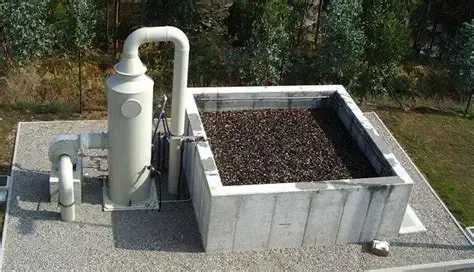
The polluted air is first directed into a humidifying column, where it is moistened and part of the solid particles is removed.
It then flows into the biofilter, whose substrate is inhabited by bacteria that use VOCs as an energy source and decompose them into harmless substances — mainly carbon dioxide and water.
Under standard operating conditions, outlet VOC concentrations do not exceed 80 mg/m³. The system is equipped with automatic irrigation and nutrient supply, ensuring bacterial activity even during short shutdowns.
Why Choose DEPURO Biofiltration?
- High efficiency – outlet VOC concentration below 80 mg/m³.
- Environmentally friendly process – biological decomposition of VOCs without the use of chemicals.
- Flexibility – the living system adapts to variable emission loads.
- Low operating costs – minimal water consumption and low energy demand.
- Stable operation – automatic irrigation and nutrient supply ensure long-term functionality.
- Turnkey solution – design, supply, installation, and optimization of the technology for the specific application.
Biofiltration Request
Looking for an eco-friendly and cost-effective solution to reduce VOC emissions in your operation?
Contact us – we’ll design a biofiltration system that meets both your technological and regulatory requirements.
