


Continuous Emission Monitoring – Precise Control and Process Optimization
Continuous emission monitoring is one of the key tools for controlling and managing industrial combustion and process operations. It enables continuous tracking of pollutant concentrations, and with real-time data, it is possible to regulate additive dosing, optimize system performance, ensure compliance with legislative limits, and reduce operating costs.
We provide our systems on a turnkey basis, including design, supply, installation, integration with the main control system, and the option to connect with the complete flue gas cleaning technology.
Advantages and Disadvantages of Each Method
In-situ method
Advantages:
- Immediate response with no delay
- Low maintenance requirements
- No sample loss during transport
Disadvantages:
- Limited capability for complex analyses
- Not suitable for all gas types (e.g., those prone to condensation)
Extractive method
Advantages:
- Enables detailed and multi-parameter analysis
- Higher accuracy for complex components
- Flexibility in the choice of measuring instruments
Disadvantages:
- More complex system design
- Requires sample conditioning and regular calibration
Projects of Continous Emission Monitoring
Measured components
Our systems are individually designed according to customer requirements. We typically provide continuous measurement of the following components:
- HCl
- NOₓ
- SO₂, SO₃ (converted to SO₂)
- HF
- NH₃
- PM (particulate matter)
- VOC (volatile organic compounds)
- PCDD/F (dioxins and furans)
Automation options based on measurement data
- Sorbent dosing control when HCl, SO₂, or other limits are exceeded
- Control of flue gas dampers for optimal flow or redirection to heat recovery
- Filtration efficiency optimization with minimal consumption of operating media
Methods Used for Continuous Emission Monitoring
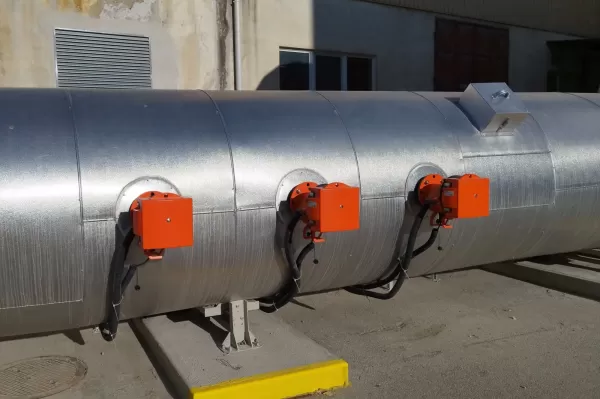
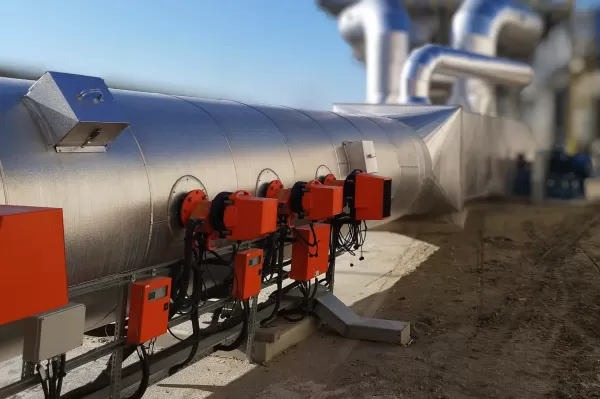
- In-situ method – measurement takes place directly in the flue gas duct without the need for sample extraction. It offers immediate response, minimal delay, and lower maintenance costs.
- Extractive method – the flue gas sample is drawn into a measuring station for detailed analysis. It allows multi-component measurement and provides higher accuracy, but requires sample conditioning (e.g., drying) and the use of reference gases.
Request for Continuous Emission Monitoring
Do you want to have precise control over emissions and the ability to automatically optimize your process operation?
Contact us – we will design and deliver a continuous emission monitoring system tailored exactly to your needs, optionally integrated with a complete flue gas cleaning technology.
